
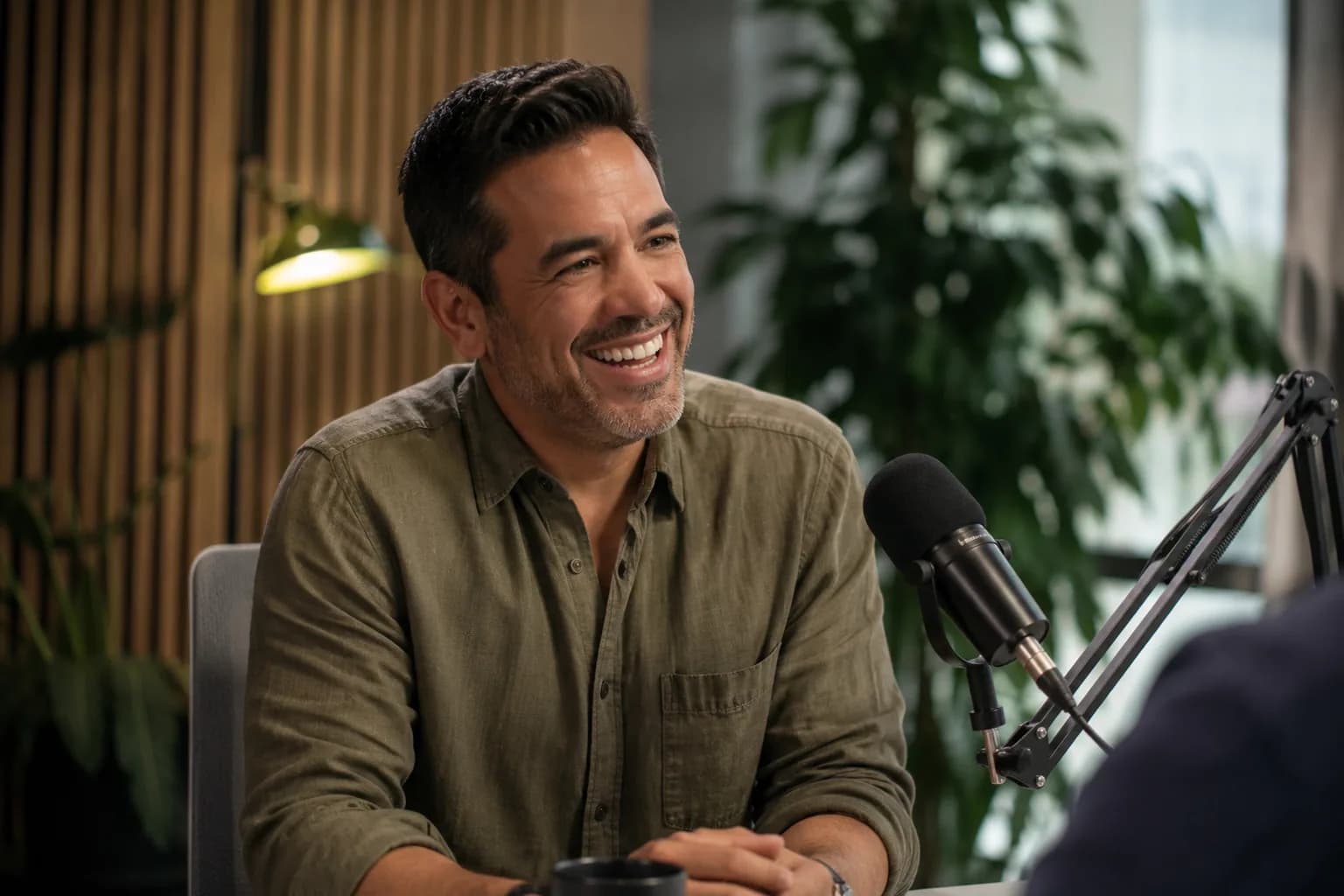
Podcast guesting is the practice of appearing as an invited guest on shows your buyers already trust, borrowing the host's audience and credibility to build your own. For a founder, one good interview can move recognition further than months of posting, because trust transfers from the host to you in a single conversation.
The channel works. The way most founders run it does not.
What Podcast Guesting Is
Podcast guesting is a distribution channel where a founder earns access to an audience someone else has already assembled. The host spent years building trust with listeners who show up every week. When that host invites you on and treats your point of view as worth an hour, a portion of the trust they have earned extends to you. You did not build the audience. You borrowed it, with permission, in front of people primed to take the recommendation seriously.
That is a different mechanism from publishing on your own channels. Posting builds reach slowly, follower by follower, and asks strangers to trust you cold. Guesting starts warm. The listener already trusts the host, the host vouches for you by booking you, and your job is to be worth the introduction.
The catch is that the channel rewards intent and punishes randomness. A founder who books shows by download count, shows up unprepared, and never touches the recording again gets a pleasant hour and almost nothing else. A founder who picks shows by buyer fit, arrives with two or three sharp ideas, and turns each episode into weeks of content builds a track record that opens doors for years.
Why Podcast Guesting Builds Authority Faster Than Posting
Authority is recognition by the people who decide whether to hire, buy, or refer you. Guesting builds it fast because it stacks three things at once: a trusted endorsement, a captive listening session, and a permanent, searchable artifact. A post competes for two seconds of attention in a scrolling feed. An interview gets forty-five minutes of a buyer's full focus while they drive, train, or walk.

The audience is also large and deliberate. About half of U.S. adults have listened to a podcast in the past year, and they choose each show on purpose rather than having it pushed at them. That intent is the asset. These are not passive viewers waiting for the algorithm to interrupt them. They opted in, they keep showing up, and they are listening for who the host brings on next.
There is a depth advantage too. Long-form audio lets you show how you think, not just what you claim. A buyer who hears you reason through a hard problem for half an hour leaves with a level of conviction no caption can manufacture. That is why a founder who guests well often converts a cold listener into a warm lead in one episode.
Where the Podcast Opportunity Gets Wasted
Two mistakes account for most of the wasted effort, and neither is about talent.
Booking by audience size instead of audience fit
The instinct is to chase the biggest download numbers, which is the wrong scoreboard. A general business show with a huge but scattered audience puts you in front of mostly the wrong people. A focused show with a smaller, qualified audience puts you in front of buyers. Recognition that matters comes from the right few hundred listeners, not tens of thousands of strangers who will never enter your market.
Treating the interview as a performance, not a conversation
Founders over-rehearse, recite a pitch, and sound like a brochure. Hosts can feel it, and so can listeners. The appearances that land are conversations where you share a genuine point of view, disagree where you mean it, and tell a real story. Preparation should sharpen your ideas, not script your sentences.
What a High-ROI Podcast Strategy Looks Like
The difference between a vanity appearance and a pipeline channel is whether the work is built to compound. One way scatters effort. The other turns every booking into an asset that keeps paying.
| Dimension | Random guesting | Strategic guesting |
|---|---|---|
| Show selection | Biggest download count available | Tightest fit with your actual buyers |
| Preparation | Wing it or recite a pitch | Two or three sharp, repeatable ideas |
| The recording | The end of the work | The start of the work |
| After the episode | Forgotten | Cut into clips, quotes, and an article |
| Measure of success | It happened | Inbound, searches, and booked calls it produced |
The right column is not harder to execute. It is the same hour of recording wrapped in a system that captures the value instead of letting it evaporate the moment the call ends.
How Do You Get Booked on the Right Shows?
You get booked by being easy to say yes to. Hosts are protecting their audience's trust, so they book guests who are relevant to their listeners, clear about the value they bring, and low-risk to put on air. That means a tight pitch tied to a specific episode angle, proof you can hold a conversation, and assets that make their job easier.
The unglamorous part is the pipeline. Consistent booking comes from a curated target list, personalized outreach, and steady follow-up, not from one viral clip that makes the phone ring. It helps to have your authority assets in place first, because a host who looks you up should find a credible bio, a clear point of view, and evidence you have done this before. Guesting and a strong profile reinforce each other, which is the heart of B2B founder visibility.
How Brand Alchemy Runs Podcast Guesting
We run guesting as part of the Authority Engine, and it starts with a Brand DNA extraction so every pitch and talking point traces back to one documented point of view. From there, outreach launches against a curated list built from your ideal customer profile, not a spray of generic pitches. The shows are chosen for buyer fit first.

Each booking comes with prep that sharpens your two or three signature ideas rather than scripting you. Then the recording becomes raw material for the content engine, which is what turns one hour into weeks of presence across your channels.
What the work asks of you
About one hour per recording, plus a short prep touch. The reporting tracks what the appearances produced, the inbound that started with an episode, the buyers who mention they heard you, the next invitation that arrived without a pitch. If a guesting program needs you to manage the pitching, the prep, and the content yourself, it is not a system. It is a second job.
Turning One Recording Into a Month of Content
The interview is the cheapest part of guesting to do once and the most expensive to waste. A single forty-five-minute episode holds a dozen quotable moments, several short-form clips, at least one article, and a handful of social posts. Most founders let all of it disappear because nobody is responsible for the harvest.
A content workflow fixes that. The recording gets transcribed, mined for the strongest moments, and reshaped into assets that live on your channels for weeks. The same hour that reached the host's audience now reaches yours, then keeps working in search long after the episode drops. That is how guesting stops being an event and starts being a borrowed audience you compound on.
Proof From Founders Who Used Guesting Well
Dr. Chris Pachel, a veterinary behaviorist and speaker, saw the compounding effect firsthand when a podcast host quoted back a line that had been co-created during his branding work. The host did not just have him on. The host remembered the idea, repeated it, and handed it to a new audience. A sharp, well-prepared point of view does not end when the episode does. It keeps traveling.

Mike B., a human connection strategist, found that the appearances themselves became proof. Each credible booking made the next conversation easier to earn, because a track record of good episodes is its own endorsement. The first show is the hardest. After that, recognition starts working in your favor.
Is Podcast Guesting Right for You?
It is the right channel if you are a founder with a genuine point of view and buyers who research before they commit. Guesting rewards substance, so it works best for people who have done the thing they talk about and can speak about it without a script. If your buyers listen to shows in your category, that is where you should be.
It is not the right move if you have no clear position yet, or if you want a single appearance to do the work of a strategy. One episode is a start, not a campaign. The founders who win with guesting treat it as a repeatable channel and build the system to support it.
How to Start Guesting With Intent
Start by naming the two or three ideas you want to be known for, then list the shows your actual buyers already trust. Fit first, downloads second. Pitch a specific angle, not a generic availability note, and have a credible profile waiting for the host who looks you up.
Frequently Asked Questions
Guesting borrows an existing audience, while hosting asks you to build one from scratch. Starting a show is a long content commitment with slow early returns. Guesting puts you in front of established listeners immediately, which is why it builds authority faster for a founder who wants pipeline rather than a media property.